Spin an unconstrained physical globe, click five concentric time rings, and press once to pull situated historical and behavioral dialogue directly from an onboard language engine.
Bay 01 & 02 · Spatial Sphere + Temporal Rings
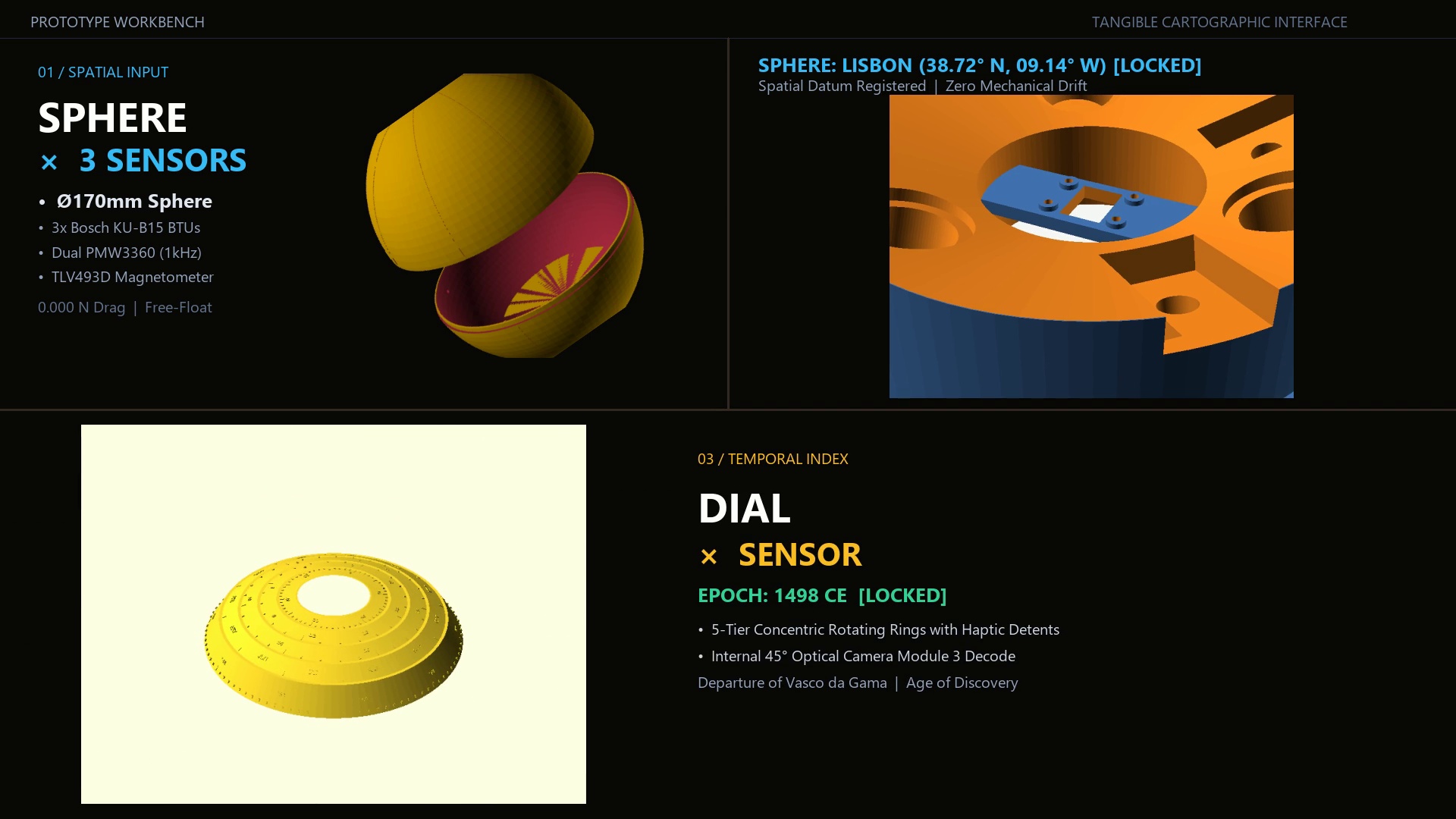
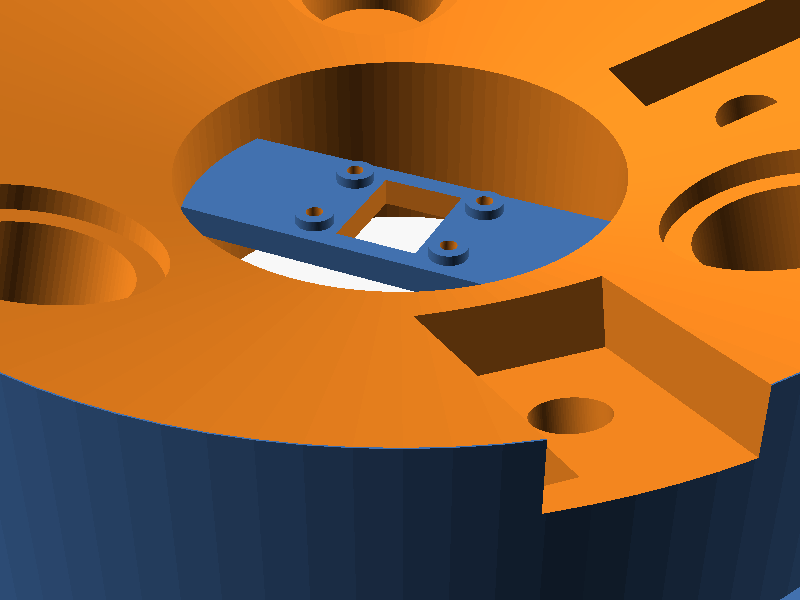
Bay 1 seats a free-spinning sphere over three ball transfer units (0.000 N detents). Two orthogonal PMW3360 optical flow sensors track angular displacement at 1,000Hz alongside a central TLV493D 3-axis magnetometer datum, resolving exact Latitude and Longitude by hand movement.
Bay 2 stacks five stepped Ziggurat rings (Year, Month, Day, Hour, Minute) read by an internal 45° camera module, locking temporal coordinates right beside geography.
Bay 03 · Electronic AI Dialogue Synthesis
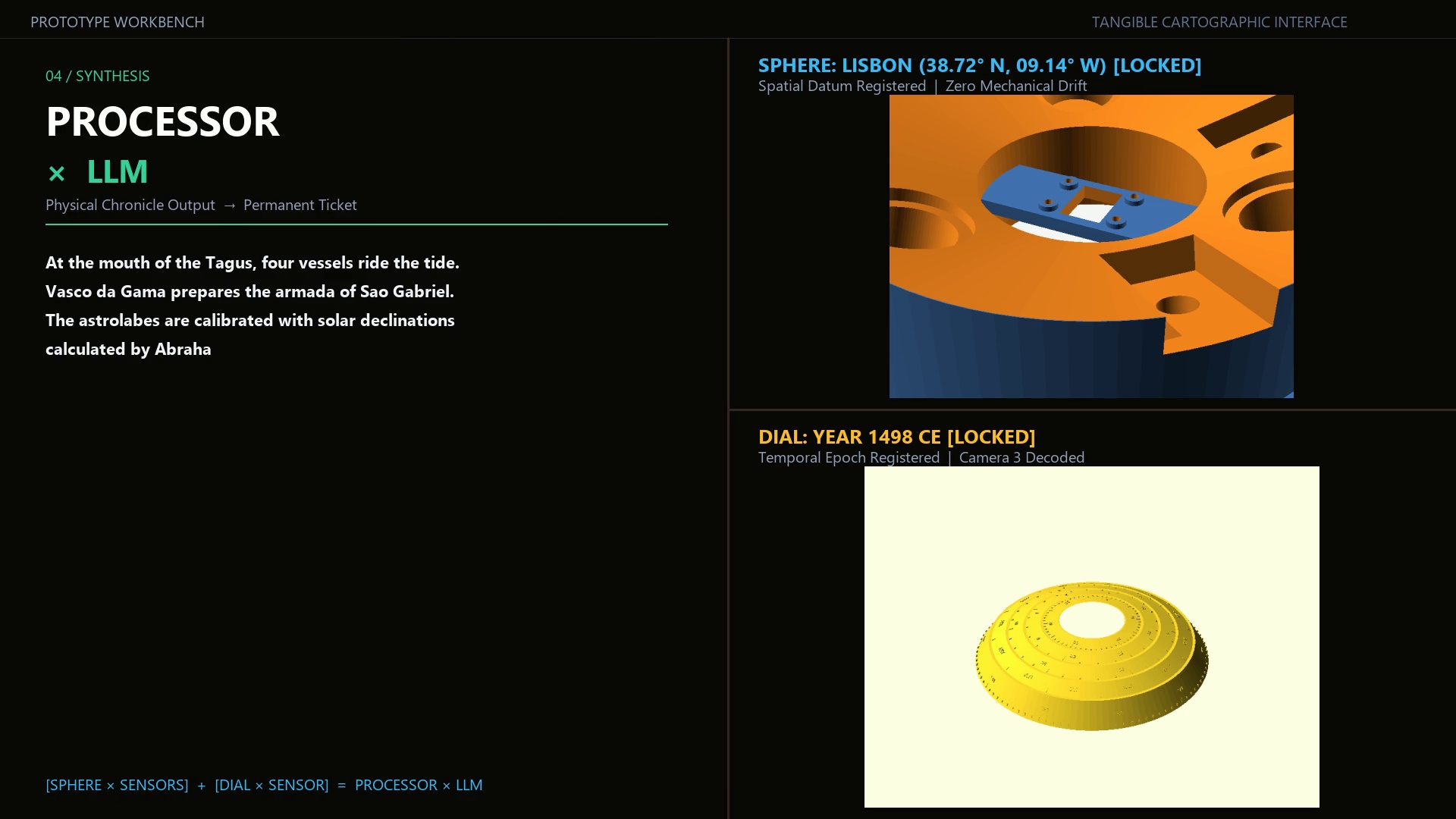
Pressing the center plunger dispatches (Latitude, Longitude) and (YYYY-MM-DD HH:MM) straight to the language model brain, grounding output against celestial placements, Arena coordinates, and historical context.
Replies render directly onto the onboard color touch display and print permanently onto 58mm paper tickets inside the instrument.
CAD & Sensor Architecture (prototype-workbench)
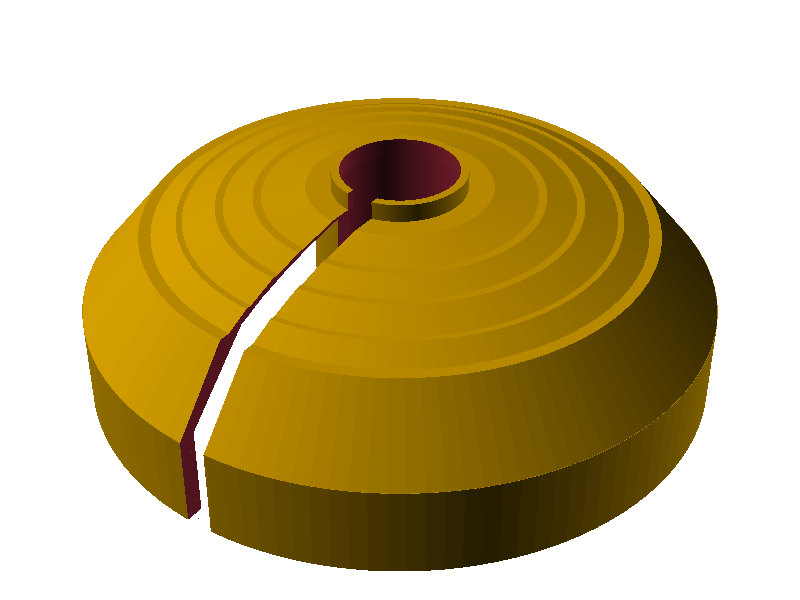
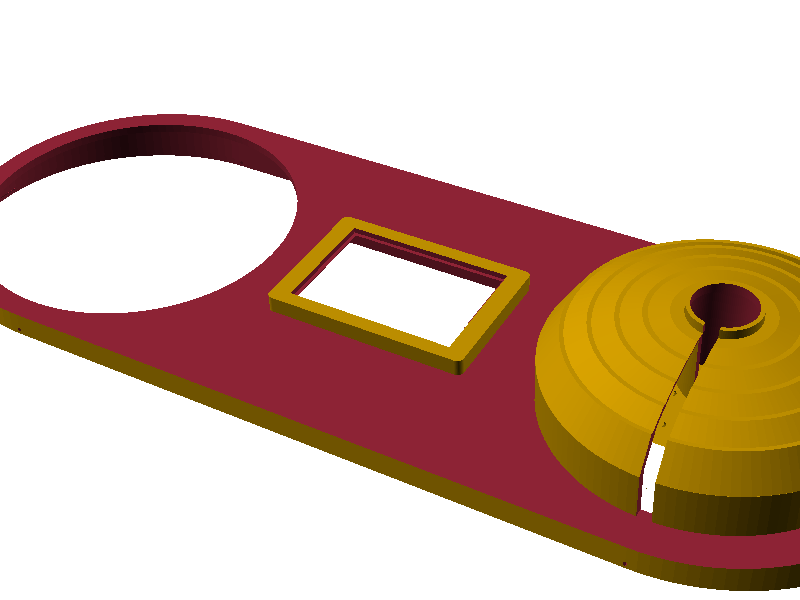
Instrument Architecture Specification
| Subsystem | Hardware Specification |
|---|---|
| Role | Tactile spatial-temporal instrument driving live AI dialogue and permanent physical print tickets |
| Spatial Bay (Bay 01) | Free-spinning globe over ball transfer units tracked by dual orthogonal PMW3360 optical sensors + TLV493D 3-axis magnetometer |
| Temporal Bay (Bay 02) | Five stepped concentric Ziggurat dials (Year, Month, Day, Hour, Minute) read via internal 45° optical camera |
| Compute & Engine | Onboard microcontroller / Linux edge host streaming (Lat, Lng, YYYY-MM-DD HH:MM) straight to the language engine |
| Output Surface (Bay 03) | Integrated IPS touch screen + 58mm embedded thermal paper chronicle printer |
Active Exhibition, Clinical & Research Dossiers
One physical instrument adapted per curatorial, clinical, or academic context. Open any dossier below for live specifications and framing tailored to each audience.
| Track | Audience & Context | Framing Focus | Dossier |
|---|---|---|---|
| Track A | Private collectors, design fairs (Lisbon by Design), boutique hospitality (The Vintage Hotel Lisbon) |
Numbered edition (1/10) calibrated to host venue coordinates outputting archival chronicle tickets |
Open PDF → |
| Track B | Portugal museums & media labs (gnration, Museu de Marinha, Pavilhão do Conhecimento, Gulbenkian / CAM, MAAT, CCB, A Oficina) |
Age of Exploration visitor station dialing birth dates onto 58mm maritime crew assignment cards |
Open PDF → |
| Track D | European electronic art centers (HEK Basel, Ars Electronica / Futurelab, V2_ Lab, iMAL, ZKM Hertzlab) |
Tactile PMW3360 + TLV493D research hardware exposing embodied AI synthesis boundaries |
Open PDF → |
| Track E | Gestalt training institutes, supervision seminars & phenomenology chairs | Physical projective third object outputting figure–ground behavioral contrast sheets on the consultation table | Open PDF → |
| Track F | Design, AI & Humanities doctoral panels (RCA School of Design, Edinburgh College of Art / EFI) |
~1,000-word practice-based MPhil / PhD research proposal in Tangible Experiential AI |
Open PDF → |
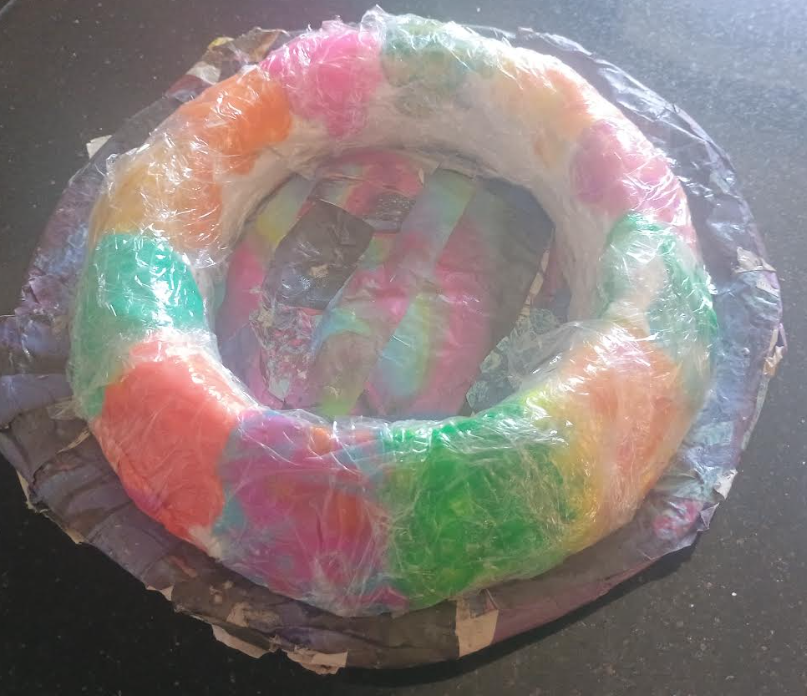
Early static prototype validating concentric arena stacking physically prior to electronic sensing and language integration.
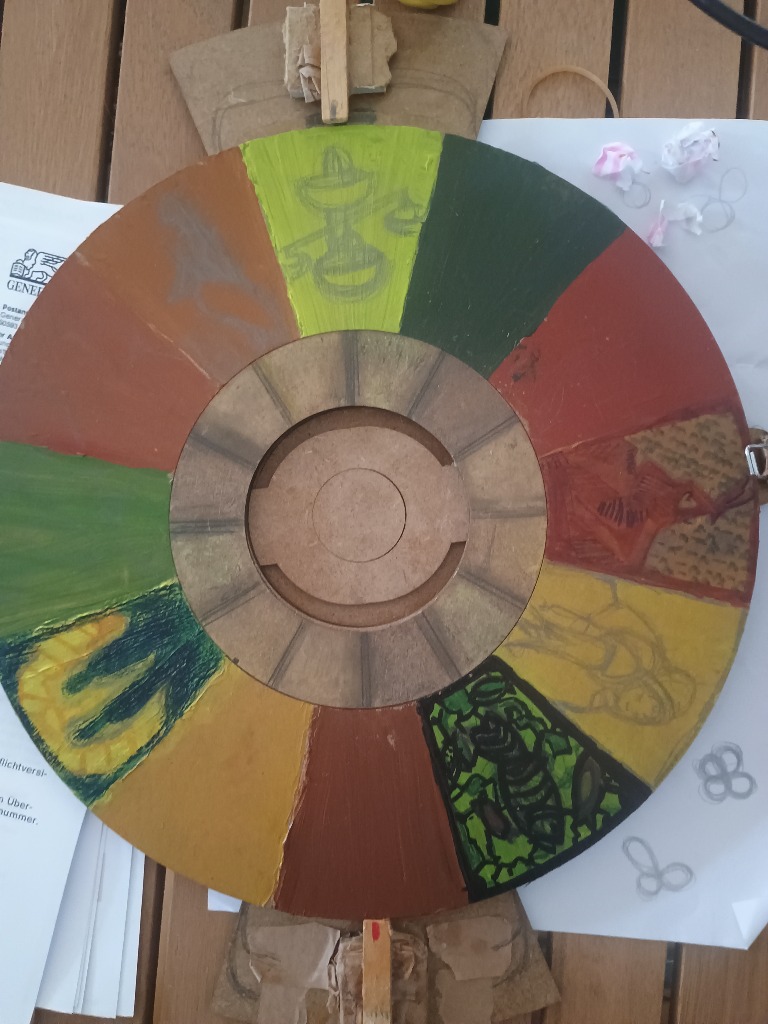
Phase 01 · Laser Cutting
The physical goal sets the chart tangibly on a bench. Screens refresh transiently; carved material holds geometry physically in space.
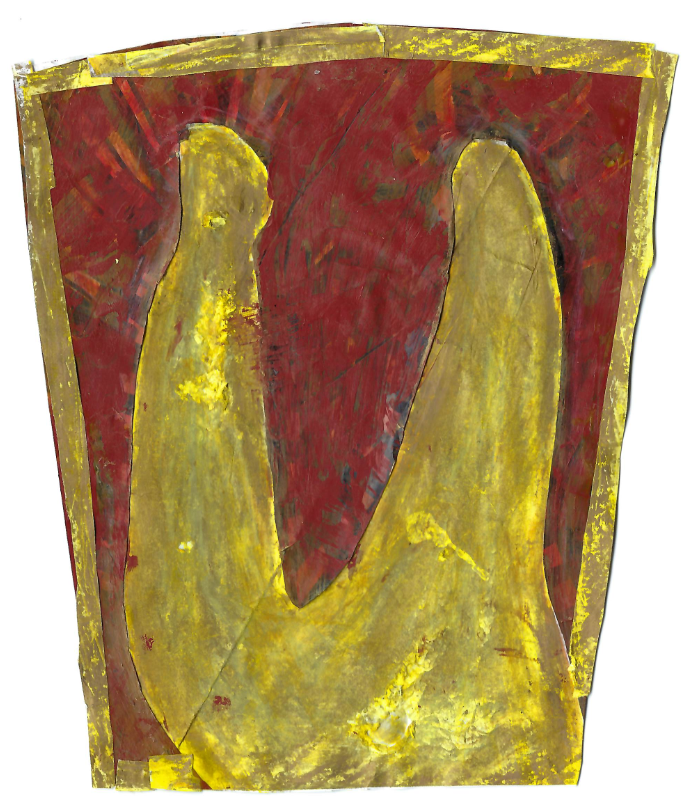
Phase 02 · Interlocking Arena Rings
Dividers establish clean boundaries rotating independently above the base plate across all twelve house zones.
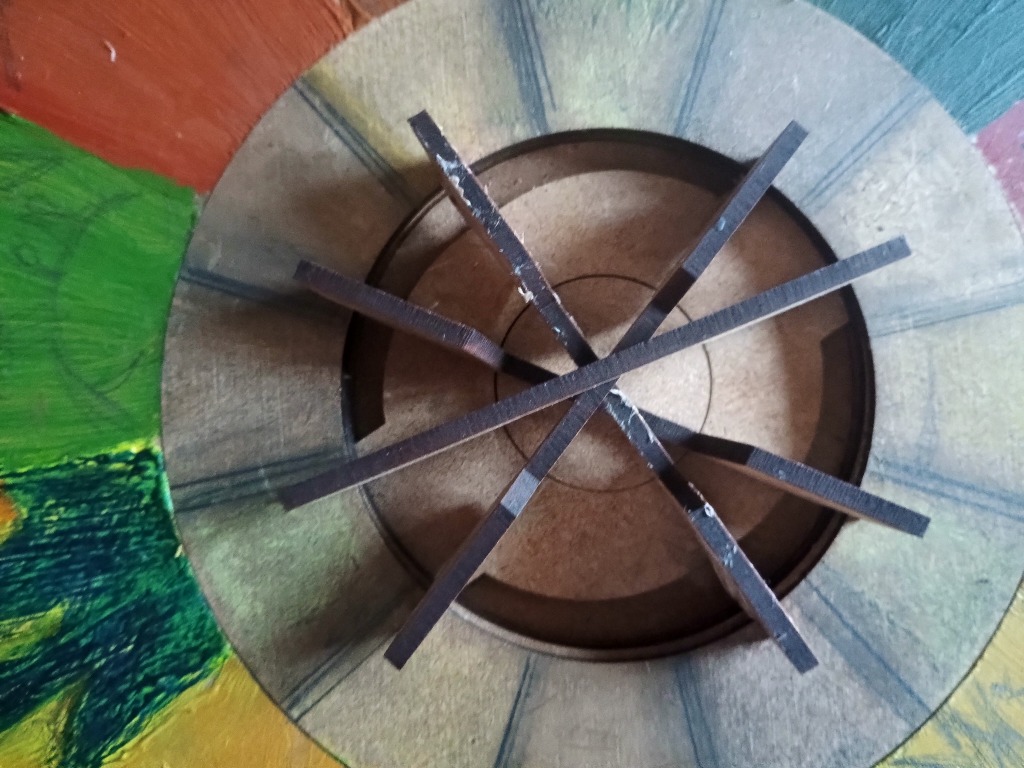
Phase 03 · Surface Treatment
Hand-painted boundary rings gave solid mass to opposing behavioral forces before motorized/optical sensor conversion began.